Static information
Printed timetables need manual updates across the network.

Dynamic information at stops
A centrally managed connected stop that turns existing telemetry into clear, current and accessible service information.
Explore proposal“The right information, at the right stop, at the right time.”
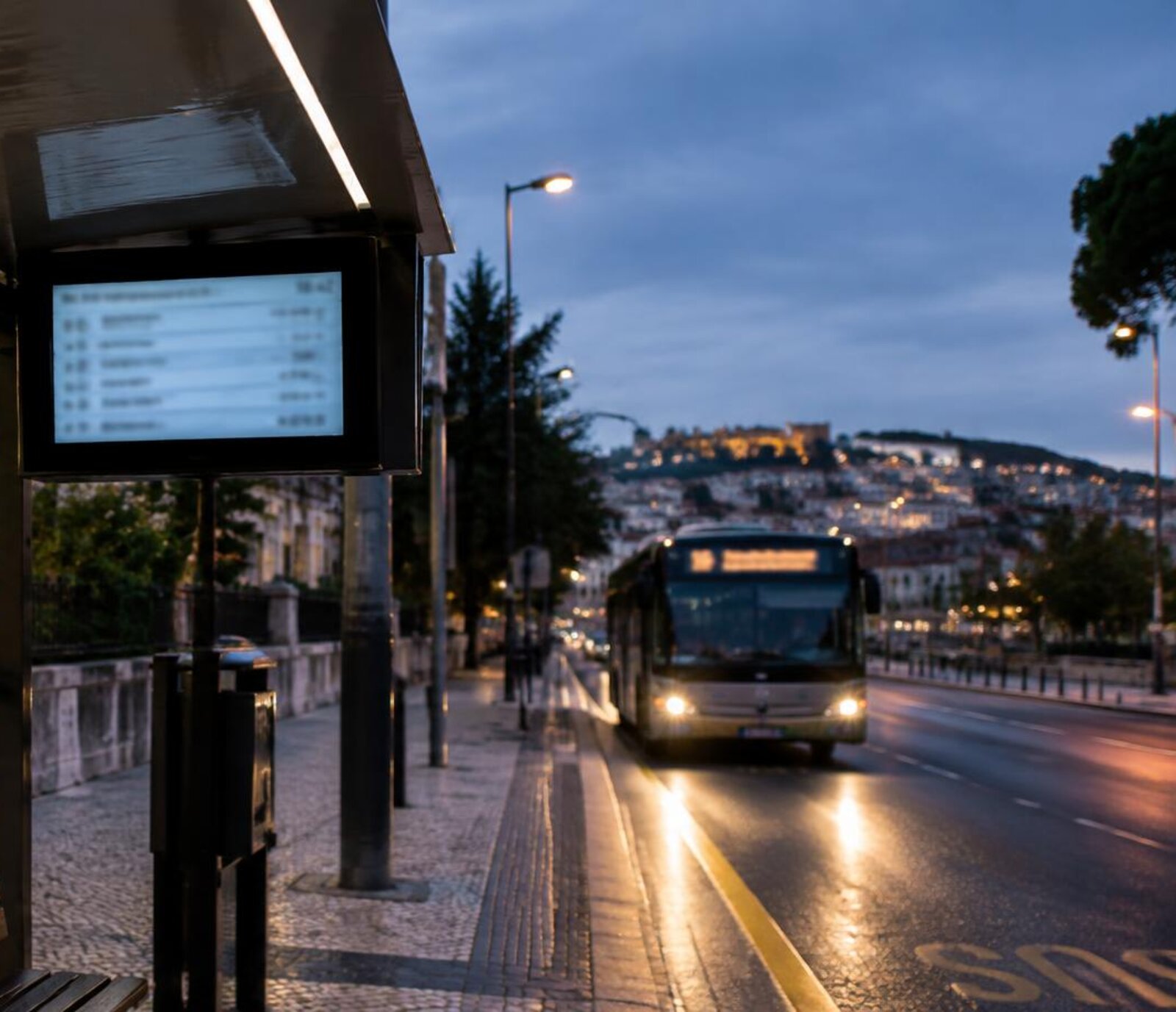
Printed timetables need manual updates across the network.
Diversions, incidents and extra services must be communicated fast.
Information at the stop remains essential for many passengers.
Timetables and physical information require manual updates. Changes, diversions and reinforcements need fast communication, without relying on smartphones alone.
The platform receives location and telemetry from existing systems, links vehicle, route and upcoming stops, and estimates arrival time.
The stop displays upcoming services, minutes to arrival, changes, diversions, incidents, cancellations, reinforcements and operational messages.
Central management ensures information across the network is coherent, accessible and ready for open integration.
Vehicle positions arrive from the operator's existing systems.
The platform links vehicle, route and stop to compute ETAs.
Operators push incidents or changes to one stop or the whole network.
A low-power connected display shows clear, accessible information.
AVL / telemetry, GTFS and operational messages.
Open APIs and standard formats.
ETA estimation and content management.
Display, connectivity and remote monitoring.
Consistent passenger information across the network.
Faster incident communication with less field work.
Reliable, accessible information right where they wait.
Central updates across the network
Less manual intervention
Consistent, accessible information
Open integration with existing systems
Use the same stops as challenge 1 to demonstrate the combined value of the infrastructure and avoid duplication from the start.
Indicative timeline, to be agreed with the partner.
Connect to a real telemetry feed and define message types.
Install connected displays at selected stops.
Run live information and test incident workflows.
Assess ETA quality, reliability and user feedback.